
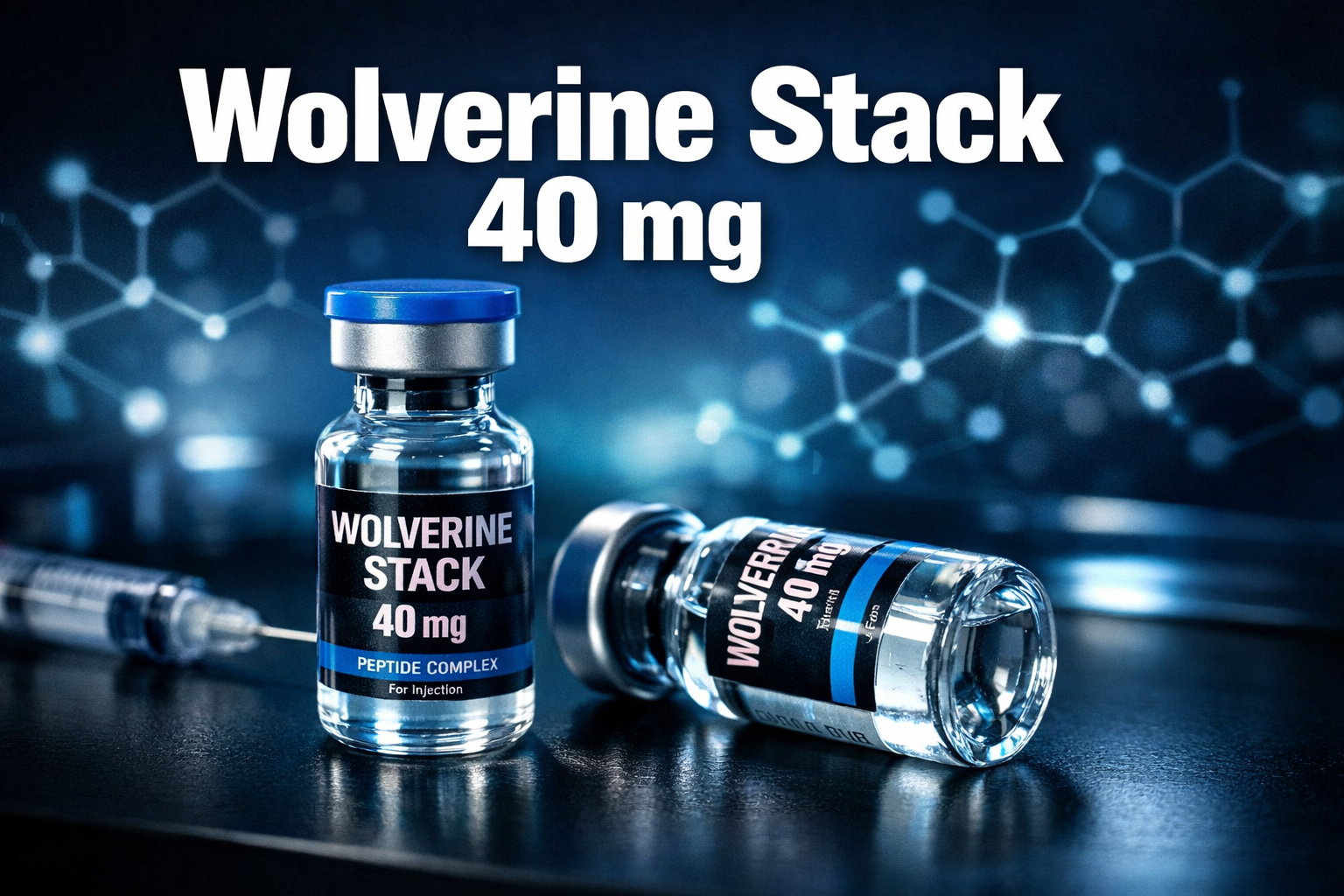
Only 3% of sports medicine peptides have generated as much grassroots clinical discussion in the past five years as the combination now widely known as the Wolverine Stack 40 mg — a pairing of two laboratory-synthesized peptides that proponents claim accelerates injury recovery at a speed that seems almost fictional. Named after Marvel’s famously self-healing mutant, this stack combines BPC-157 and TB-500 into a single protocol that has captured the attention of athletes, biohackers, and clinicians alike [1]. As of April 2026, the regulatory landscape surrounding these compounds shifted dramatically, making it more important than ever to understand exactly what the Wolverine Stack is, how it works, and what the science actually says.
Key Takeaways 🔑
- The Wolverine Stack 40 mg combines two peptides — BPC-157 and TB-500 — in a single recovery-focused protocol [1]
- In April 2026, the FDA announced it would remove both BPC-157 and TB-500 from bulk drug substance Category 2, signaling a major regulatory shift [2]
- Peptide stacking strategies, including the Wolverine Stack, are among the fastest-growing topics in patient wellness communities [3]
- The broader peptide market is experiencing rapid expansion driven by influencer culture, clinical interest, and regulatory evolution [4]
- Anyone considering the Wolverine Stack 40 mg should consult a licensed healthcare provider before use, as these compounds are not FDA-approved treatments
What Is the Wolverine Stack 40 mg?
The name alone is enough to spark curiosity. The Wolverine Stack 40 mg refers to a combined peptide protocol that pairs BPC-157 (Body Protection Compound 157) and TB-500 (Thymosin Beta-4 fragment), typically administered together to target tissue repair, inflammation reduction, and accelerated recovery from musculoskeletal injuries [1].
The “40 mg” in the name generally refers to the total combined dosage used in a given protocol cycle, though specific dosing varies significantly between clinics, practitioners, and individual use cases. This is not a pharmaceutical drug approved by any major regulatory body — it is a peptide combination that exists in a legal and clinical gray zone that is rapidly becoming less gray.
💬 “The Wolverine Stack is among the most discussed peptide combinations in patient communities, with conversations centered around recovery and repair protocols.” [3]
The Origin of the Name
The “Wolverine” branding is no accident. Logan — the X-Men character — heals from virtually any wound within seconds. While BPC-157 and TB-500 cannot replicate that level of science fiction, the nickname stuck because users report remarkably fast recovery from injuries that previously sidelined them for weeks or months. A competitive CrossFit athlete who tears a rotator cuff, a weekend warrior dealing with chronic Achilles tendinopathy, or a middle-aged runner struggling with a nagging hamstring strain — these are the people who found their way to peptide stacking forums and started asking about the Wolverine Stack 40 mg.
The Two Peptides Behind the Wolverine Stack 40 mg
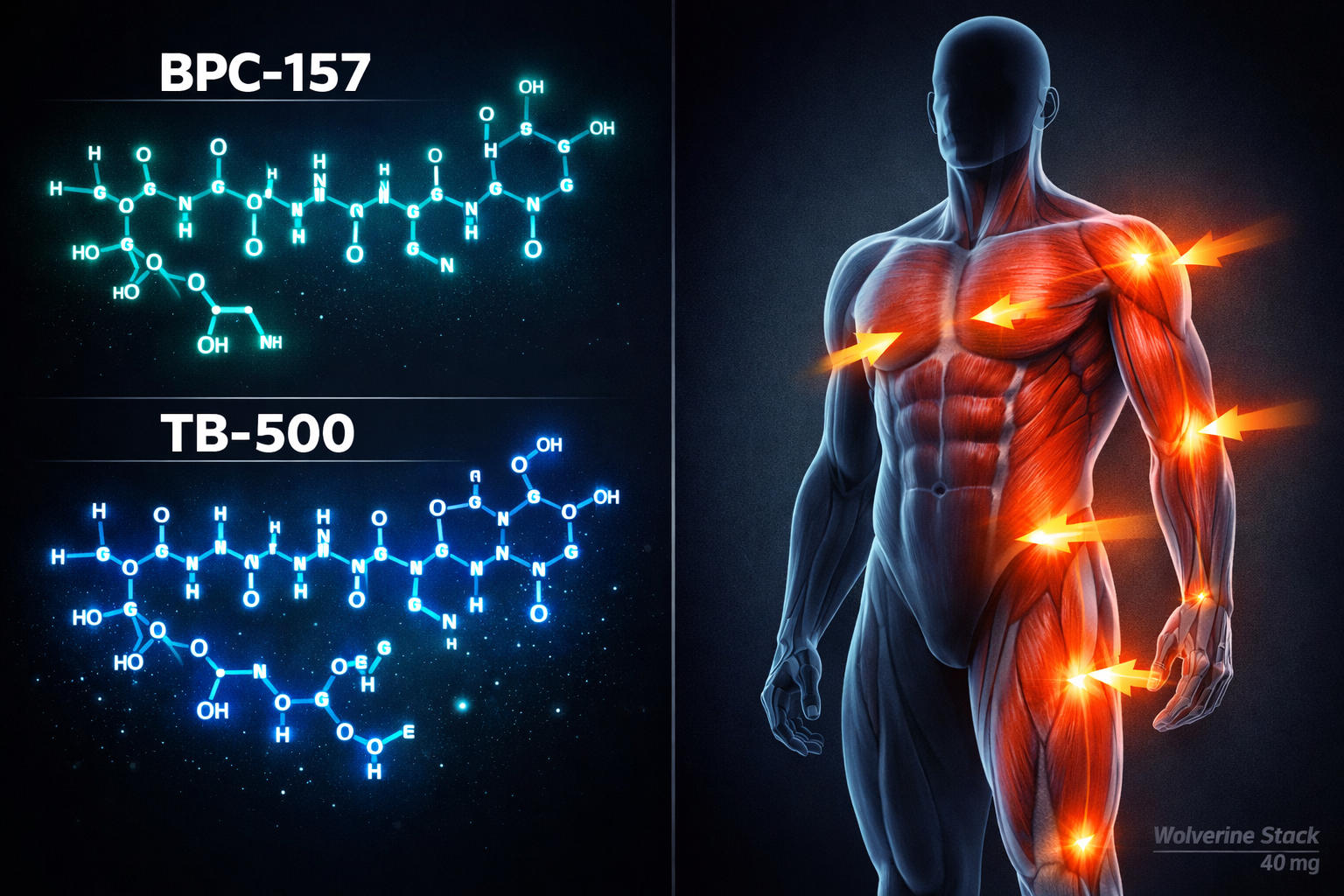
Understanding the Wolverine Stack requires understanding each of its two components individually before examining how they work together.
BPC-157: Body Protection Compound
BPC-157 is a synthetic peptide derived from a protein found naturally in human gastric juice. It consists of 15 amino acids and has been studied primarily in animal models for its effects on:
- 🔬 Tendon and ligament healing — BPC-157 appears to upregulate growth hormone receptors in tendon fibroblasts
- 🩹 Gut mucosal repair — Originally studied for inflammatory bowel conditions
- 🧠 Neurological protection — Some animal studies suggest neuroprotective properties
- 💪 Muscle tissue repair — Accelerated recovery from muscle tears in rodent models
BPC-157 is considered a “systemic” peptide, meaning its effects appear to extend beyond the local injection site. This is one of the reasons it became so popular — a single subcutaneous injection may support healing in multiple areas simultaneously [1].
Key BPC-157 facts at a glance:
| Property | Detail |
|---|---|
| Origin | Derived from human gastric juice protein |
| Chain Length | 15 amino acids |
| Primary Use | Tissue repair, gut healing |
| Administration | Subcutaneous or intramuscular injection |
| Research Status | Primarily animal studies; limited human trials |
TB-500: Thymosin Beta-4 Fragment
TB-500 is a synthetic version of a naturally occurring peptide called Thymosin Beta-4, which is found in virtually all human and animal cells. It plays a critical role in:
- 🏃 Actin regulation — Helps control cell migration and tissue repair
- 🩸 Angiogenesis — Promotes the formation of new blood vessels
- 🔥 Anti-inflammatory action — Reduces inflammation at injury sites
- 🦴 Bone and cardiac repair — Studied for its potential in heart tissue healing
TB-500 is particularly noted for its ability to travel throughout the body via the bloodstream, making it what researchers call a “long-distance” healing peptide. Unlike some compounds that only work locally, TB-500 can theoretically support tissue repair far from the injection site [1].
Key TB-500 facts at a glance:
| Property | Detail |
|---|---|
| Origin | Synthetic fragment of Thymosin Beta-4 |
| Natural Presence | Found in all nucleated cells |
| Primary Use | Inflammation reduction, angiogenesis |
| Administration | Subcutaneous injection |
| Research Status | Animal studies; some human cardiac research |
Why Stack Them Together?
The logic behind combining BPC-157 and TB-500 in the Wolverine Stack 40 mg is rooted in complementary mechanisms. BPC-157 works at the cellular level to stimulate growth factor expression and receptor upregulation, while TB-500 works systemically to reduce inflammation and improve blood flow to damaged tissue. Together, proponents argue, they address the healing cascade from multiple angles simultaneously.
Think of it like a construction crew: BPC-157 is the structural engineer laying the blueprint for new tissue, while TB-500 is the logistics team ensuring materials (nutrients, oxygen, new blood vessels) reach the job site efficiently.
The 2026 FDA Regulatory Shift: What Changed and Why It Matters
The regulatory environment surrounding the Wolverine Stack 40 mg changed significantly in April 2026. The FDA announced it would remove BPC-157 and TB-500 from bulk drug substance Category 2 — the category that had previously allowed compounding pharmacies to use these peptides in preparations without an approved new drug application [2].
This is a pivotal development. Category 2 had been a kind of regulatory holding zone — a list of substances that compounding pharmacies could use while their clinical utility was under review. Being removed from Category 2 means these peptides can no longer be legally compounded by 503A or 503B pharmacies in the United States [2].
💬 “The FDA’s decision to remove BPC-157 and TB-500 from Category 2 represents one of the most significant regulatory moments in the peptide space in recent years.”
What This Means for Patients and Practitioners
The implications of this change are significant and multifaceted:
For patients currently using the Wolverine Stack:
- Access through compounding pharmacies in the U.S. will become restricted or eliminated
- Sourcing from unregulated online vendors becomes more likely — and more risky
- The need for proper medical supervision becomes even more critical
For healthcare providers:
- Prescribing or recommending the Wolverine Stack 40 mg through traditional channels becomes legally complicated
- Providers operating in the peptide space must stay current with state-by-state regulations
- International sourcing and telehealth models may shift to accommodate demand
For the broader market:
- Demand is unlikely to disappear — it may simply move underground or offshore
- The regulatory change could accelerate pharmaceutical interest in developing approved versions of these compounds
- Patient advocacy groups are likely to push back against restrictions on access
This regulatory shift does not mean BPC-157 and TB-500 are proven dangerous — the FDA’s decision is largely administrative and reflects the agency’s position that these compounds lack sufficient clinical trial data to meet compounding standards. It does not constitute a safety ban [2].
How the Wolverine Stack 40 mg Is Typically Used
While this article does not constitute medical advice, understanding how the Wolverine Stack is typically administered helps contextualize the clinical and patient discussions surrounding it.
Common Dosing Protocols
Dosing varies widely depending on the source, but a frequently cited general protocol includes:
| Peptide | Common Dose Range | Frequency |
|---|---|---|
| BPC-157 | 250–500 mcg | Once or twice daily |
| TB-500 | 2–2.5 mg | 2–3 times per week (loading), then weekly |
| Combined (Wolverine Stack) | Variable | Protocol-dependent |
The “40 mg” designation in the Wolverine Stack 40 mg name typically refers to a combined vial or cycle total, though this varies between suppliers and clinicians. Some protocols use a pre-mixed vial containing both peptides, while others administer them separately.
Administration Methods
The most common administration routes include:
- Subcutaneous injection — Most popular; peptides are injected just under the skin
- Intramuscular injection — Used for targeted local tissue repair
- Oral capsules — Less bioavailable but increasingly available; primarily for gut-related BPC-157 use
- Nasal spray — Emerging route; limited data on systemic bioavailability
Typical Use Cases
The Wolverine Stack 40 mg has been discussed in the context of:
- 🏋️ Sports injuries — Tendon tears, ligament sprains, muscle strains
- 🦵 Chronic joint pain — Knee, shoulder, and hip conditions
- 🏃 Post-surgical recovery — Accelerating healing after orthopedic procedures
- 🧬 Gut health — BPC-157’s original research focus
- 🧠 Neurological recovery — Traumatic brain injury protocols (highly experimental)
The Science: What Does the Research Actually Show?
Honesty matters here. The enthusiasm surrounding the Wolverine Stack 40 mg significantly outpaces the clinical evidence base. The majority of research on both BPC-157 and TB-500 has been conducted in animal models — primarily rats and mice — with very limited controlled human trials.
What Animal Studies Suggest
Animal research has produced some genuinely compelling results:
- Tendon healing: Studies in rats showed significantly faster tendon repair with BPC-157 compared to controls
- Muscle repair: Rodent models demonstrated reduced recovery time from induced muscle tears
- Anti-inflammatory effects: TB-500 consistently reduced inflammatory markers in animal injury models
- Cardiac repair: Thymosin Beta-4 (TB-500’s parent compound) showed promise in cardiac tissue regeneration in animal models
The Human Evidence Gap
The critical problem is the translation gap between animal models and human physiology. What works in a rat’s tendon may not produce the same results in a human athlete’s rotator cuff. As of 2026, there are no large-scale, double-blind, placebo-controlled clinical trials in humans that definitively prove the Wolverine Stack’s efficacy for any specific indication.
What does exist:
- Anecdotal reports from thousands of users in online communities
- Small observational studies at specialized clinics
- Case reports from sports medicine practitioners
- Ongoing research that has not yet produced peer-reviewed results
⚠️ Important note: The absence of large human trials does not mean the compounds are ineffective — it means the evidence is insufficient to make definitive claims. This is precisely why the FDA’s regulatory position is what it is.
Safety Profile: Known and Unknown Risks
The reported side effect profile of the Wolverine Stack 40 mg is generally considered mild in the existing literature, with the most commonly reported issues being:
- Injection site reactions (redness, swelling)
- Mild nausea (more common with BPC-157)
- Dizziness or lightheadedness
- Potential hormonal interactions (not well studied)
Long-term safety data is essentially nonexistent. The compounds have not been studied in humans over extended periods, meaning unknown risks cannot be ruled out. Potential concerns include effects on cancer cell growth (both peptides stimulate angiogenesis, which could theoretically support tumor growth), hormonal disruption, and immune system effects [1].
The Exploding Peptide Market: Context for the Wolverine Stack’s Popularity
The Wolverine Stack 40 mg does not exist in isolation — it is part of a much larger cultural and commercial wave sweeping through the wellness and performance optimization space [4].
Why Peptide Stacking Is Surging in 2026
Several forces are converging to drive unprecedented interest in peptide protocols:
1. Social media and influencer culture
Fitness influencers, longevity podcasters, and biohacking content creators have brought peptide stacking to mainstream audiences. What was once confined to elite sports medicine circles is now discussed openly on platforms with millions of followers.
2. The longevity movement
The broader cultural obsession with extending healthspan — not just lifespan — has created a massive market for compounds that promise to keep the body functioning at peak capacity. Peptides fit perfectly into this narrative [4].
3. Telehealth expansion
The explosion of telehealth platforms has made it easier than ever for patients to access practitioners willing to discuss and prescribe peptide protocols. Geographic barriers that once limited access to specialized clinics have largely dissolved.
4. Patient-driven demand
Unlike many pharmaceutical products that are pushed through physician channels, peptide interest is often patient-driven. People research compounds themselves, bring the information to their doctors, and advocate for their own protocols [3].
💬 “Peptide stacking strategies are experiencing significant growth driven by influencers, regulatory changes, and increased interest in coordinated multi-pathway treatments.” [4]
The “Wolverine Recovery” as a Cultural Moment
The Wolverine Stack has become something of a cultural touchstone within the peptide community. Clinics across the United States — particularly in states like California, Texas, and Florida where wellness culture is deeply embedded — have reported significant increases in patient inquiries about recovery-focused peptide stacks [3].
The naming convention matters psychologically. Calling something the “Wolverine Stack” rather than “BPC-157 plus TB-500 peptide combination protocol” does something powerful — it creates a memorable, aspirational identity around the product. Patients want to heal like Wolverine. That desire is entirely human, and the marketing around these compounds has been extraordinarily effective at tapping into it.
Who Is Considering the Wolverine Stack 40 mg? Real-World Profiles
The people drawn to the Wolverine Stack 40 mg span a surprisingly wide demographic range. Consider these representative profiles drawn from the broader community discussion:
The Competitive Athlete
Marcus, 34, competitive triathlete: Dealing with a chronic Achilles tendon issue that had resisted six months of physical therapy, Marcus found the Wolverine Stack through a podcast interview with a sports medicine physician. After consulting with a specialized clinic, he completed a 12-week protocol. He reports significant reduction in pain and a return to full training. His experience is anecdotal — but it is representative of thousands of similar stories circulating in athletic communities.
The Post-Surgical Patient
Diana, 52, knee replacement recovery: After her second knee surgery in five years, Diana was frustrated with the pace of her rehabilitation. Her orthopedic surgeon was unfamiliar with peptide protocols, but a sports medicine physician she consulted separately was willing to discuss TB-500 as an adjunct to her physical therapy. She describes her recovery as “faster than the first surgery by a significant margin,” though she acknowledges multiple variables were different.
The Longevity Enthusiast
Robert, 61, executive and biohacker: Robert approaches his health like a portfolio — diversified, data-driven, and always looking for an edge. He runs quarterly blood panels, tracks his HRV daily, and has experimented with multiple peptide protocols over three years. The Wolverine Stack 40 mg is one of several compounds in his rotation, used seasonally to address the cumulative wear of an active lifestyle.
These are not clinical case studies — they are representative portraits of the real people driving demand for the Wolverine Stack in 2026.
Alternatives and Complementary Approaches
For those interested in the goals of the Wolverine Stack 40 mg but concerned about the regulatory and safety uncertainties, several evidence-based alternatives and complementary strategies deserve consideration:
Evidence-Based Recovery Interventions
| Approach | Evidence Level | Primary Benefit |
|---|---|---|
| Platelet-Rich Plasma (PRP) | Moderate | Tendon and joint repair |
| Extracorporeal Shock Wave Therapy | Moderate-Strong | Tendinopathy treatment |
| Eccentric Loading Protocols | Strong | Tendon rehabilitation |
| Collagen Peptide Supplementation | Moderate | Connective tissue support |
| Sleep Optimization | Strong | Systemic recovery |
| Cold/Heat Contrast Therapy | Moderate | Inflammation management |
These approaches lack the dramatic branding of the Wolverine Stack but carry substantially stronger human evidence bases. The most effective recovery protocols typically combine multiple modalities — which is, ironically, the same logic that underlies peptide stacking itself.
Other Peptide Stacks Gaining Attention
The Wolverine Stack is not the only peptide combination generating interest in 2026. Other stacks being discussed in clinical and patient communities include:
- Glow Protocol — Peptide combinations targeting skin health and collagen production [3]
- California Trim Stack — Weight management-focused peptide combinations [3]
- GHK-Cu protocols — Copper peptide combinations for anti-aging applications
- CJC-1295/Ipamorelin — Growth hormone secretagogue stacks for body composition
Navigating the Wolverine Stack 40 mg Responsibly
Given everything covered above — the compelling anecdotal evidence, the limited clinical research, the significant regulatory changes, and the real safety unknowns — how should someone approach the Wolverine Stack 40 mg responsibly?
A Framework for Informed Decision-Making
Step 1: Consult a qualified healthcare provider
This is non-negotiable. A physician familiar with peptide protocols — ideally one with sports medicine, functional medicine, or anti-aging medicine training — should be the starting point for any discussion about the Wolverine Stack 40 mg.
Step 2: Understand the regulatory context
As of April 2026, the FDA’s removal of BPC-157 and TB-500 from Category 2 means that sourcing these compounds through U.S. compounding pharmacies is no longer straightforward [2]. Understanding the legal landscape in your jurisdiction is essential.
Step 3: Review your personal health context
Certain conditions may represent contraindications or require additional caution:
- Active cancer or cancer history (due to angiogenic properties)
- Pregnancy or breastfeeding
- Autoimmune conditions
- Cardiovascular disease
Step 4: Source carefully if proceeding
If a qualified provider recommends the Wolverine Stack, sourcing matters enormously. Unregulated online sources vary wildly in purity, concentration, and sterility. Contaminated or mislabeled peptides represent a genuine health risk.
Step 5: Track and document outcomes
Anyone using the Wolverine Stack 40 mg should maintain detailed records of dosing, timing, subjective outcomes, and any adverse effects. This data contributes to the broader understanding of these compounds and supports informed decisions about continuing or discontinuing use.
The Future of the Wolverine Stack 40 mg
The regulatory shift of April 2026 is not the end of the story for BPC-157 and TB-500 — it may be the beginning of a new chapter [2]. Several possible trajectories are worth considering:
Pathway 1: Pharmaceutical Development
The FDA’s removal of these peptides from Category 2 could accelerate interest from pharmaceutical companies in developing them as approved drugs. If a company invests in the clinical trials necessary to demonstrate safety and efficacy, BPC-157 or TB-500 could eventually become legitimate prescription medications. This would take years and significant capital investment.
Pathway 2: International Access
Regulatory frameworks vary significantly by country. What is restricted in the United States may remain accessible in Canada, Mexico, Europe, or Australia. Medical tourism and international telehealth platforms may increasingly serve patients seeking access to these compounds.
Pathway 3: Underground Market Growth
Perhaps the most concerning trajectory — restrictions on legitimate access often drive demand underground. Unregulated online markets for peptides already exist; tighter U.S. regulations may simply shift purchasing behavior toward less safe sourcing channels.
Pathway 4: Research Acceleration
Increased public and commercial interest in peptides is driving more research investment. The next five years may produce the human clinical trial data that has been conspicuously absent from the Wolverine Stack’s evidence base. If that data is positive, the regulatory conversation could shift dramatically.
Conclusion: What to Do With the Wolverine Stack 40 mg in 2026
The Wolverine Stack 40 mg sits at a genuinely fascinating intersection — compelling biological mechanisms, enthusiastic patient communities, limited but intriguing research, and a rapidly shifting regulatory environment. It is neither the miracle recovery protocol its most ardent supporters claim nor the dangerous fringe compound its harshest critics suggest. The truth, as is so often the case in medicine, is more nuanced.
Here is what is clear as of 2026:
✅ The Wolverine Stack combines BPC-157 and TB-500, two peptides with plausible biological mechanisms for tissue repair [1]
✅ The FDA’s April 2026 regulatory change significantly affects how and where these compounds can be legally accessed in the United States [2]
✅ Patient interest is high and growing, driven by real unmet needs in injury recovery and performance optimization [3]
✅ The broader peptide market is expanding rapidly, and the Wolverine Stack is among its most recognized protocols [4]
❌ Large-scale human clinical trial evidence is still lacking
❌ Long-term safety data does not yet exist
Actionable Next Steps
- Talk to a specialist — Find a sports medicine or functional medicine physician familiar with peptide protocols before making any decisions
- Stay current on regulations — The legal landscape around peptides is evolving rapidly; check updated guidance from the FDA and your state medical board
- Demand quality — If you proceed under medical supervision, insist on pharmaceutical-grade sourcing with third-party testing
- Contribute to the evidence base — Consider participating in any available clinical trials or patient registries studying these compounds
- Manage expectations — The Wolverine Stack 40 mg may support recovery, but it is not a substitute for proper rehabilitation, sleep, nutrition, and training load management
The story of the Wolverine Stack 40 mg is still being written. The next few years of research, regulation, and real-world outcomes will determine whether this peptide combination earns a permanent place in legitimate sports medicine or fades into the long history of promising compounds that never quite delivered on their potential.
References
[1] What You Need To Know About The Wolverine Stack – https://healthymale.org.au/health-article/what-you-need-to-know-about-the-wolverine-stack/
[2] Fda Announces Change In Status Of 12 Peptides – https://ssrpinstitute.org/news/fda-announces-change-in-status-of-12-peptides/
[3] Peptide Stacking Is Exploding And Patients Are Starting To See Why – https://www.prunderground.com/peptide-stacking-is-exploding-and-patients-are-starting-to-see-why-from-wolverine-recovery-to-glow-protocols-california-trim-clinic-breaks-down-what/00377845/
[4] Get Ready For The Peptides Gold Rush – https://www.mmm-online.com/news/get-ready-for-the-peptides-gold-rush/